 By Gazette Staff By Gazette Staff
June 15th, 2026
BURLINGTON, ON
Burlington MP Karina rose in the House of Commons earlier this month to note and read into the record that it has been 20 years since the death of OPP Sergeant Greg Stobbart, a beloved Burlington resident who was killed by a careless motorist while on a training ride on his bike. He was a dedicated officer with 25 years of experience, a committed athlete and a deeply loved family man and friend.
 Eleanor founded the Share the Road Cycling Coalition. In the face of unimaginable loss, Greg’s wife, Eleanor McMahon, chose courage. She founded the Share the Road Cycling Coalition, which has since become one of the most influential road safety organizations in Canada.
Eleanor’s advocacy resulted in “Greg’s law”, Ontario’s one-metre safe passage law, strengthening penalties for drivers who injure or kill vulnerable road users. From grief to purpose, she transformed road safety in Ontario and saved lives.
With the 20th-anniversary Share the Road Gran Fondo in Milton and the annual Ontario Bike Summit, we remember Sergeant Stobbart, honour his legacy and together continue the work.

 By Pepper Parr By Pepper Parr
June 15th, 2026
BURLINGTON, ON
Try this.
Your doctor wants some blood work done.
You go to a privately operated lab to have that work done.
The past practice was that the lab did the work and sent the blood or urine samples to the processing centre and the results were sent directly to your doctor.
  LifeLabs, a company that has facilities across the country, in most communities, was sold to Quest, an American multinational. Quest has been attempting to cut back services to Ontario’s patients. In Sudbury, they attempted to close their laboratory processing facility entirely and have now reduced its staffing by half. Between January to March, they cancelled afternoon hours at the Kenora lab collection centre. LifeLabs, a company that has facilities across the country, in most communities, was sold to Quest, an American multinational. Quest has been attempting to cut back services to Ontario’s patients. In Sudbury, they attempted to close their laboratory processing facility entirely and have now reduced its staffing by half. Between January to March, they cancelled afternoon hours at the Kenora lab collection centre.
Currently, they are beginning to move lab tests that are done in Ontario’s hospitals to the United States.
Whoa! Information about your health is being collected by a lab in Canada and sent to the United States for processing? With the results being sent toyour doctor?
For decades, these reference laboratory tests have been performed in Ontario’s hospitals. Shifting them to the United States raises serious patient privacy and specimen quality concerns, delays results, harms the efficiency and independence of Ontario’s medical laboratory system, transfers more Ontario health care dollars to the United States and reduces income to our hospitals.
On March 9, 2026, LifeLabs/Quest informed “external laboratories” that reference laboratory tests will be transitioned to Quest Diagnostics. What they call “external laboratories” are Ontario’s public hospital medical laboratories that have been routinely used for many years by LifeLabs to test samples from Ontario patients that LifeLabs did not have the ability to process.
Quest’s reference laboratories are all in the United States. Quest’s March 9 memo states that phase one of this transfer of tests to the United States will begin on April 6 with phases two and three following in the period May to July of this year.
Quest’s actions will:
The Ontario Health Coalition maintains these actions by Quest demonstrate a lack of concern about delivering high-quality medical laboratory services in Ontario. Maximizing corporate income by bleeding income from Ontario’s health care system and patients should not be the driving force of our medical laboratory system. Quest’s contract to provide outpatient medical laboratory services in Ontario must be cancelled as soon as possible and your government must restore all outpatient lab testing to the control of local public hospitals.
 Burlington MPP Natalie Pierre Transferring the community laboratory work to the hospitals will make a more integrated health system and ensure public – and Canadian domestic — control over these vital services. It will be cheaper, provide better quality and faster care, strengthen the services within the local hospitals and increase accessibility for patients to needed health services.
The provincial government is sitting in the Legislature these days, but the local MPP Natalie Pierre is still around. Pop a note to her office asking her if she is aware of this change and what she thinks about it?
 Gazette Staff Gazette Staff
June 15th, 2026
BURLINGTON, ON
A 12-year-old boy has been charged in connection with an early-morning hit-and-run in East York on Monday that injured a Toronto police officer and that is also linked to a shooting, investigators say.
The boy faces seven charges including attempted murder, theft of a motor vehicle and assaulting an officer, police said in a post on social media.
 Established in 1834, it was the first local police service created in North America and is one of the oldest police services in the English-speaking world. Emergency crews responded to calls about a shooting near Mortimer and Donlands avenues in East York around midnight Monday, a Toronto paramedics spokesperson said. A youth was taken to hospital with injuries that weren’t life-threatening.
At about the same time, officers responded to a call about a vehicle theft in the area of Donlands Avenue and O’Connor Drive.
Authorities said they tried to stop a vehicle and shot at it before the driver hit an officer and fled the scene, police said. A Toronto police officer was taken to hospital with serious injuries, which are not considered life threatening, according to the police post.
After police found the vehicle again, the driver was taken to hospital with non-life threatening injuries, as well.
Three people — two 12-year-olds and a 13-year-old — were in the vehicle, which was stolen.
Four police officers — two each in two police vehicles — tried to stop the driver of the stolen vehicle. The driver tried to flee, during which “there was contact made with a police officer and that vehicle. Multiple shots then fired at the stolen vehicle. The driver took off and abandoned the car at Floyd and Donlands avenues a short distance away before being arrested on foot later.
One youth who was in the car is still at large.
The boys will not be identified due to their age. They will be punished and will eventually be released. Is this incident the first step for a career criminal? Where were the parents. What are the chances that this is a single parent situation
By Gazette Staff
June 15th, 2026
BURLINGTON, ON
The burial of a Canadian soldier killed in the First World War, Private Albert (Bert) Henry Detmold, will take place at the Commonwealth War Graves Commission’s (CWGC) Loos British Cemetery outside Loos-en-Gohelle, France. The public is also welcome to attend.
Private Detmold was born in Hamburg, Germany, to a prominent British family; his maternal uncle, Rufus Isaacs, was the first Jewish Chief Justice of England. After schooling in the UK, he immigrated to Canada to farm in Manitoba. When war broke out, he returned to Europe and ultimately served as part of the 107th (Timber Wolf) Battalion.
Private Detmold was killed in action on August 15, 1917, at the age of 33, on the first day of the Battle of Hill 70.
His remains were found during a construction project in August 2020. The Department of National Defence announced his identification in March 2026.
Private Detmold will be buried by The North Saskatchewan Regiment, in the presence of his family, with the support of Veterans Affairs Canada. Representatives of the Government of Canada and the local French Government will be in attendance.
 These are the people who paid for the democracy we have today.
– 30 –
 By Elfrida Stokes By Elfrida Stokes
June 12th, 2026
BURLINGTON, ON
 Online gambling has quietly moved from a niche industry story into something Burlington households see every day. Online gambling has quietly moved from a niche industry story into something Burlington households see every day. The ads now appear in places where readers are not looking for them at all:
- alongside sports broadcasts
- in social feeds
- between search results
- on Canadian comparison sites
This article is not a ranking of casinos and not an invitation to gamble. This article treats online gambling the way it would treat any financial-risk topic: explain it, point to official sources, and flag the warning signs.
Why online gambling is now a local consumer issue
Provincial regulation does not stop at the city line. Ontarians see the same ads, the same bonus language, and the same payment promises whether they live in Toronto or Burlington.
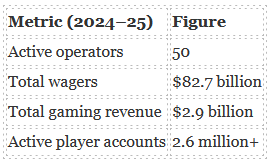 One caveat sits inside that table. Active player accounts are not unique people, because the same person can hold accounts with several operators. A large account number is a measure of market reach, not a measure of how many Ontarians are gambling. One caveat sits inside that table. Active player accounts are not unique people, because the same person can hold accounts with several operators. A large account number is a measure of market reach, not a measure of how many Ontarians are gambling.
Local impact is harder to quantify than provincial revenue. Household budgets, family stress, and youth exposure to advertising do not appear in operator filings, but they show up in Burlington living rooms.
What “online gambling” means in Ontario
Before evaluating any site, it helps to separate the players in the system. Online gambling in Ontario covers casino-style games, sports and event betting, poker, bingo, and lottery-style products delivered through a website or app.
Four kinds of websites tend to get confused:
- Operators: companies that run gambling sites and take wagers.
- Platforms: the underlying technology a brand uses to deliver games.
- Comparison or information directories: third-party sites that explain terms, list operators, or summarize bonuses.
- Regulators: government bodies that license, register, and enforce the rules.
The Alcohol and Gaming Commission of Ontario sits in the last category. Its player-support page for online gambling explains the regulator’s role in registering and supervising online gambling sites and setting standards for player protection and game integrity. Marketing copy from any other site, however polished, is not a substitute for that information.
Where casino directories fit, and what they cannot verify for you
 Canadian casino-information directories should be treated as a starting point for vocabulary and comparison, not as a substitute for checking Ontario regulatory status or reading the operator’s own terms. When readers search for terms like “wagering requirement,” “fast withdrawals,” or “Canadian-friendly casino,” they often land on comparison directories rather than regulator pages. These directories can help with vocabulary, but they should not be treated as official authority.
Readers may see licensing notes, payout claims, bonus language, and review-style summaries on Canadian casino-information directories such as https://casinocanada.com/, but those details should be treated as a starting point for vocabulary and comparison, not as a substitute for checking Ontario regulatory status or reading the operator’s own terms.
A directory can:
- Explain what a wagering requirement or a no-deposit bonus is.
- Show categories of payment methods or game types.
- Summarize an operator’s claims.
A directory cannot:
- Confirm that a particular operator is currently registered in Ontario.
- Replace the operator’s full terms and conditions.
- Promise outcomes such as fast payouts or fair play on your behalf.
The rule of thumb is simple. Use directories to learn the words, and use the AGCO and the operator’s own legal pages to learn the facts.
What Ontario regulation is supposed to do
The provincial igaming market launched on April 4, 2022, with iGaming Ontario conducting and managing the legal market and AGCO acting as regulator. The same iGaming Ontario annual report describes that mandate alongside work on responsible gambling, anti-money laundering, and a centralized self-exclusion system.
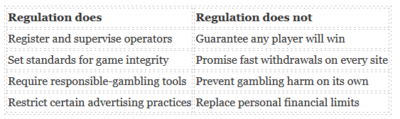 It helps to be specific about what regulation covers and what it does not. That distinction matters when reading any marketing message. Regulated status tells you the operator has agreed to rules. It does not tell you that gambling is risk-free for you personally. It helps to be specific about what regulation covers and what it does not. That distinction matters when reading any marketing message. Regulated status tells you the operator has agreed to rules. It does not tell you that gambling is risk-free for you personally.
Advertising, bonuses, and the fine print readers should notice
Bonus language is one of the most common ways readers encounter online gambling, and it is also one of the most misread. The word “free” rarely means free without conditions.
AGCO’s marketing and advertising guidance sets out that advertising materials communicating gambling inducements, bonuses, and credits are prohibited in Ontario except on an operator’s own gaming site and through direct marketing after a player has given consent.
When a bonus offer does appear in a place where it is permitted, the details that matter sit in the fine print:
- Wagering requirements: how many times the bonus must be wagered before any winnings can be withdrawn.
- Eligible games: some games count fully, others only partially or not at all.
- Time limits: bonuses often expire within days.
- Maximum bet caps: betting above a stated amount while a bonus is active can void winnings.
- Withdrawal conditions: minimum amounts, identity verification, and processing times.
Reading those five items takes a few minutes and changes how an offer looks. A headline number says little until the conditions are checked.
Risk signals: when gambling stops being entertainment
Gambling problems rarely announce themselves in a single moment. CAMH’s overview of problem gambling describes harm as a continuum that can affect work, school, mental and physical health, finances, reputation, and relationships, rather than a single threshold to cross.
ConnexOntario’s gambling treatment service page lists warning signs that are easier to notice in everyday life:
- Spending more time or money on gambling than planned.
- Struggling to stop or cut back.
- Chasing losses by gambling more to win back what was lost.
- Borrowing money or building debt to keep gambling.
- Hiding gambling activity from family or friends.
- Feeling anxious, irritable, or low when not gambling.
Gambling harm is not only about losing money. It can quietly shift sleep, focus, mood, and trust inside a household well before a financial crisis is visible.
Noticing one of these signs is not a diagnosis. It is a reason to pause and consider whether the activity still looks like entertainment.
Scams, fake trust signals, and basic checks before money or ID changes hands
Not every gambling site that looks Canadian is regulated in Ontario, and not every trust badge on a homepage corresponds to a real audit. Practical caution comes before money or identity documents are shared.
A short checklist covers most situations:
- Verify regulatory status separately. Look up the operator through official regulator information rather than relying on the site’s own claims.
- Read the withdrawal terms, not just the deposit offer. Check minimums, processing windows, and verification steps.
- Identify who actually operates the site. The company name in the footer or terms is the entity behind the brand.
- Be skeptical of guarantees. Promises of guaranteed wins, instant payouts, or risk-free play are marketing, not facts.
- Treat bonus-heavy messaging as a prompt for extra caution, given Ontario’s restrictions on public advertising of inducements and credits.
- Do not share ID or payment details with operators whose registration and contact information cannot be confirmed.
If a check fails, the safer move is to walk away. Lost time is recoverable. Lost identity documents and deposits often are not.
Self-exclusion and support resources in Ontario
 Self-exclusion is a voluntary tool that puts a barrier between a person and gambling for a defined period. The same iGaming Ontario annual report describes a centralized self-exclusion system that will allow Ontarians to self-exclude from all regulated igaming sites in the province, with registered operators required to participate. Self-exclusion is a voluntary tool that puts a barrier between a person and gambling for a defined period. The same iGaming Ontario annual report describes a centralized self-exclusion system that will allow Ontarians to self-exclude from all regulated igaming sites in the province, with registered operators required to participate.
For people who want to talk to someone before, during, or after taking that step, ConnexOntario offers free, confidential support that is available 24/7 across Ontario and does not require a referral.
A few points worth keeping in mind:
- Self-exclusion is most useful as one part of a wider plan, alongside conversations, financial steps, and professional support where needed.
- Help is not reserved for severe cases. ConnexOntario and CAMH services treat gambling concerns along a continuum.
- Family members can also reach out for guidance about supporting someone else.
A household checklist for Burlington families
Conversations are easier before a crisis than during one. The warning signs listed by Ontario health and support sources translate naturally into household questions.
Topics worth raising at the kitchen table:
- Money rules: a clear, separate amount for entertainment, never drawn from rent, food, savings, or debt payments.
- Time rules: limits on sessions, especially in the evening when judgment fades.
- Shared devices: whether gambling apps belong on phones or tablets that teenagers also use.
- Advertising literacy: how to read sports-broadcast and social-media gambling ads as marketing, not advice.
- Hidden losses: an agreement that financial mistakes can be raised without immediate blame.
- When to ask for help: which Ontario resource the family will contact first if signs appear.
These are not legal or clinical answers. They are starting points that lower the cost of speaking up later.
Bottom line: read gambling information like any other financial-risk claim
A useful frame for the whole topic is this: online gambling material deserves the same scrutiny as an investment pitch or a credit offer.
 Online gambling material deserves the same scrutiny as an investment pitch. A short summary for readers who want one paragraph to remember:
- Comparison directories explain vocabulary. Regulators define legality.
- Advertising and bonus headlines are marketing. The conditions are in the terms.
- Warning signs are personal and practical, not abstract.
- Help in Ontario is free, confidential, and available before things reach a crisis.
Read with that frame, the noise tends to fall away, and the questions that actually protect Burlington households move to the front.
By Gazette Staff
June 14th, 2026
BURLINGTON, ON
Council approved the Advisory Committees of Council Governance Framework (LLS-08-26) and directed the City Clerk to conduct a review of the Advisory Committees of Council portfolio, applying the framework to make recommendations on whether to maintain, combine or wind down committees.
 Former Toronto Mayor David Crombie speaks at a Waterfront Advisory meeting and tells them to “look for some oddballs to sit on your design committee”. Mayor Goldring says he doesn’t know any oddballs to put on the committee he has formed to Define the Dream. Staff are to report back to Committee of the Whole within the first three months of 2027 to align with the new term of Council.
Council also directed the City Clerk to update terms of reference, the Public Appointment Policy and other related documents to support the revised committee portfolio and governance framework.
One would hope that the City Clerk would reach out to the public and listen to what people who choose to be involved what City Hall does have to say.
At the very least, he should ask for written suggestions.
 By Gazette Staff By Gazette Staff
June 14th, 2026
BURLINGTON, ON
The Performing Arts people were a litte slow in getting this one out the door.
Bands from navy stations HMCS Stadacona and HMCS Naden will be on the BPAC Main Theatre stage for a seventy five minute concert.
Admission is FREE!

 Bringing together musicians from Halifax and Victoria, this concert unites members of the Royal Canadian Navy’s Stadacona and Naden Bands for a rare joint performance. Bringing together musicians from Halifax and Victoria, this concert unites members of the Royal Canadian Navy’s Stadacona and Naden Bands for a rare joint performance.
Audiences can expect a dynamic and moving program showcasing Canadian music, featured soloists, and selections that reflect the proud traditions and evolving sound of Canada’s navy bands.
Performed by the country’s finest military musicians, this special evening highlights collective artistry and a shared commitment to honouring service.
An opportunity to hear the shared musical voice of the Royal Canadian Navy.
By Pepper Parr
June 14th, 2026
BURLINGTON, ON
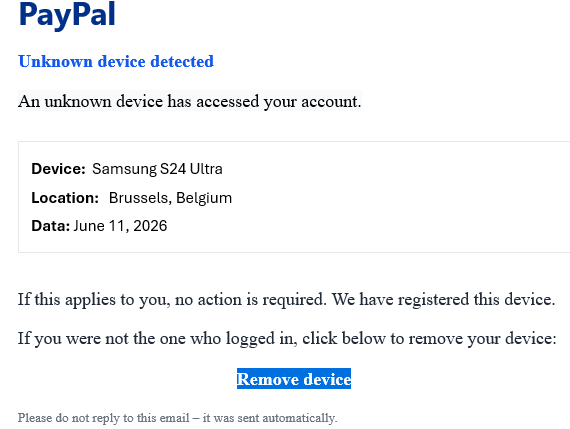
Does this look suspicious to you?
Look at the email address.
manop@smartcalth.com
PayPal is tough on the security side.
You’ve got to be very very good to get past their security people.
 By Pepper Parr By Pepper Parr
June 14th, 2026
BURLINGTON, ON
Politically, it was a disaster. All kinds of procedural by-law issues resulted in the Ward 2 Councillor Lisa Kearns walking out of a Council meeting.
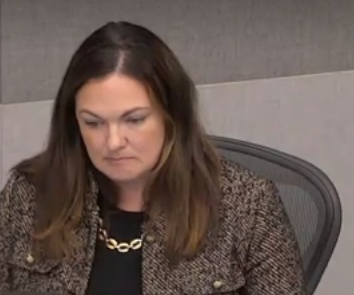 Ward 2 Councillor Lisa Kearns “Today, I excused myself from the June Committee of the Whole meeting following two agenda items affecting Ward 2 Residents being Closed for Debate.
“I asserted that I could not dispose of my obligation to represent the community on items related to Cricket at Central Park and Options to Restrict Construction without the procedural opportunity to state my voting rationale and complete my questions. Since this pattern emerged, I silently exited the Council Chambers for the balance of Committee and will resume with my work on behalf of the constituents I serve at Council on June 23rd, 2026.”
Setting the political drama aside – there is a problem with sufficient space for people to play cricket.
Staff at Recreation, Community and Culture had to know that there was a major change taking place in the demographic makeup of the city. More people want to play cricket. The games tend to last a long time, and at this point, there is just the one cricket pitch in the city. A second is scheduled for Sherwood Forest in 2029 at a cost that runs into the millions.
None of this was new. Our question is – why didn’t staff put together what was known and develop a policy that would manage the demographic changes taking place?
Kearns had a meeting with the people living along the border of Central Park, where the game is played on April 25th. It was not an easy meeting for the Council member and staff didn’t leave with gold stars.
They had legitimate complaints and they made their view very clear. The last comment made at the difficult meeting came from a resident who said to Kearns: “This one is on you.
Did Staff stick it to the Council member deliberately? No but staff didn’t have a plan in place that citizens could understand and accept.
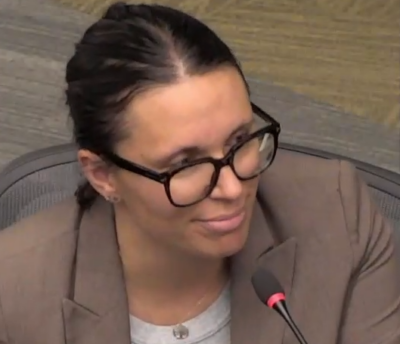 Emilie Cote: Director Recreation, Community and Culture Emilie Cote, Director Recreation, Community and Culture, is a young intelligent woman in a role that has had to handle a couple of awkward files.
The allocation of pool time should have been resolved within the department. Instead, it was given to the Procurement people who get tied up in procedural problems that are part of large dollar contracts. The pool use issue is nickels and dimes.
Cote has been given a lot of room to grow the department. The tin ear she has when it comes to the politics of situations is very evident. She should have taken the pool issue to a higher level – the Chief Administration Officer should have been consulted. That didn’t seem to happen.
There is space at City View Park that could accommodate a cricket pitch with next to nothing in residential areas anywhere near the site.
There was a very very short conversation with Cote at that xx meeting. She had little to say other than that the Sherwood Forest location would come on stream in 2029.
The cricket community has every reason to be upset and the residents who have to put up with the noise and the cricket balls landing in their back yards
The new dedicated cricket pitch and associated park upgrades at Sherwood Forest Park in Burlington are expected to be completed and ready for play by 2029. The total estimated budget for the park revitalization, which includes the cricket field with irrigation and lighting, is approximately $4.1 million. The city is expected to tender the park renewal project in late 2026, with major construction planned between 2027 and 2028, leading up to the target 2029 opening.
The west side of Sherwood Forest Park (5270 Fairview St) was selected as the only municipal site in Burlington that has enough space to host a full-size, regulation cricket field.
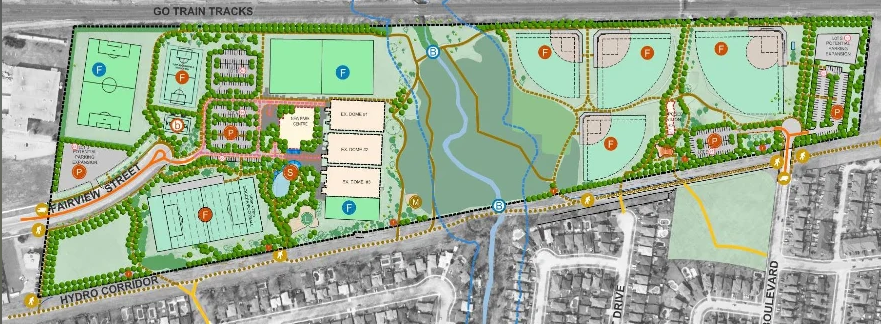 Sherwood Forest Park in the East End of Burlington. Related news story:
Ward 2 Councillor gets a rough ride. Click HERE for the details
By Gazette Staff
June 14th, 2026
BURLINGTON, ON
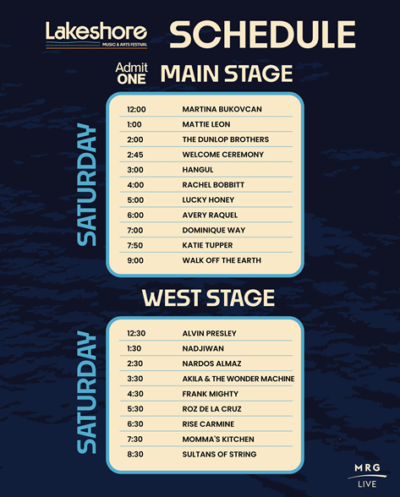
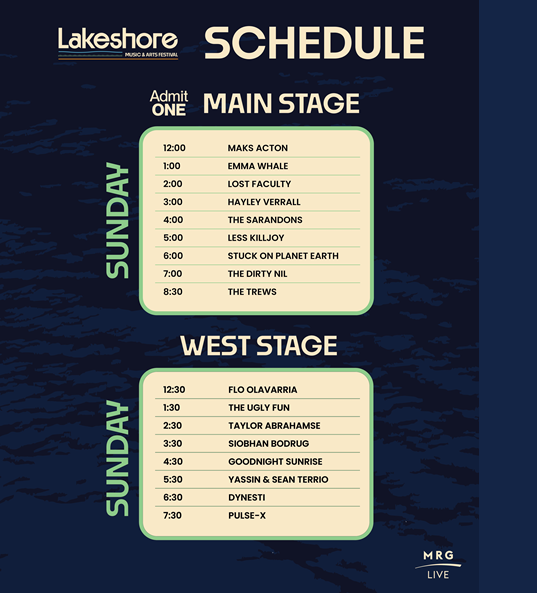
 A week and a bit away and the public will get to see what MRG Live is going to produce for their first Lakeshore Music & Arts Festival. A week and a bit away and the public will get to see what MRG Live is going to produce for their first Lakeshore Music & Arts Festival.
The Festival is replacing what we knew as the Sound of Music.
It has been an awkward process for many.
MRG Live is a private for profit company that has event in a number of communities. They are very strong in British Columbia. They are not local in the way that Sound of Music was; this is not a home grown event. It is going to take time for them to figure out how the Burlington market can be made to work for the them and for Burlington to get used to an organization that is here to make a profit.
Making enough to cover costs proved not to be possible for the Sound of Music people and the city decided it didn’t want to continue subsidizing them.
MRG Live sets out what will appear on the two stages during the 20th and 21st of June.
No entrance fee. Gates open at
Saturday June 20th. from 11am-10:30pm
Sunday June 21st. from 11am-9:30pm
 By Sadie Smith By Sadie Smith
June 12th, 2026
BURLINGTON, ON
Ontario’s online gambling market has grown a lot in the past four years. In 2025 operator revenues were C$4 billion, which was up 34% on the previous year. From that the province received around C$800 million in revenue sharing and other funding agreements. Yet that massive growth hasn’t come without some criticism, some of which has translated to new rules and limits for operators.
 So how is the provincial government balancing this influx of tax dollars and a clear demand from the market, with social responsibilities and listening to sometimes influential groups on both sides of the discussion? This article will look at the facts behind what is actually going on, and the latest updates for 2026. So how is the provincial government balancing this influx of tax dollars and a clear demand from the market, with social responsibilities and listening to sometimes influential groups on both sides of the discussion? This article will look at the facts behind what is actually going on, and the latest updates for 2026.
Well, Ontario’s online gambling market now has an estimated 1.24 million monthly players between the 70 or so regulated and licensed operators.
March 2026 was the biggest month on record with C$9 billion wagered across sports betting, poker and online casinos, with operators keeping C$388 million as revenue. The previous record was from January 2026, so it’s clear there is still growth in the market even four years in.
There are also businesses in other digital niches that benefit from consumer and operator spend in the gambling niche, and employ locals in Ontario and further afield. Canadian digital infrastructure and marketing firms are benefiting from the boom in online gambling in North America, including GeoComply, based in Vancouver, BC, and many others.
For example, there are now so many regulated sites that casino gamblers often turn to independent lists of Ontario online casinos to find out exactly what each site offers. Platforms like Casino.org let players compare bonuses, game selections and other factors, put together by experts in the business.
All of this shows that even though Ontario now has strict rules about advertising and promotion of gambling, the business is still going strong.
 One measure of success Ontario’s legislators like to point out is not only tax but the market capture. This is how much gambling activity now occurs at regulated sites and not at offshore gambling operations. Before the open market launched in 2022, research consensus was around 75% of Ontario’s online gambling activity occurred at offshore sites. The OLG.ca official sports betting and casino site only accounted for around 25% of bets, after launching years earlier in 2015. One measure of success Ontario’s legislators like to point out is not only tax but the market capture. This is how much gambling activity now occurs at regulated sites and not at offshore gambling operations. Before the open market launched in 2022, research consensus was around 75% of Ontario’s online gambling activity occurred at offshore sites. The OLG.ca official sports betting and casino site only accounted for around 25% of bets, after launching years earlier in 2015.
Now in 2026, the Alcohol and Gaming Commission of Ontario estimates around 85% of the province’s online gambling activity is at regulated sites. With such sites having more consumer protections and oversight, by most people’s measures that is a success. Add into the equation billions of dollars in revenue sharing agreement deals and you can see why it is seen as a success story by many.
So much so that Alberta is soon following suit. It is set to open its own provincially regulated but open online gambling market on July 13.
So that’s the growth part of the equation. But what has been going on in reaction to all this money flooding around the province’s gambling sector?
Who Has Been Calling for More Regulation and What Moves Have Been Made
Tinkering with the model has been part of Ontario’s legal market since launch. In fact, within the first year of opening the market the AGCO had launched public consultations on plans to cut back on gambling advertising in the province.
By late 2023 it had decided. From February 2024, operators could no longer use athletes or former athletes in gambling advertisements. It also specifically banned operators from advertising bonuses in physical locations, such as billboards or in print media.
In 2024 and 2025 regulators mostly focused on enforcement action against offshore casinos that continued to advertise to Ontarians, as well as responsible gambling messaging. On top of day-to-day duties such as collecting financial information and dealing with disputes or operator concerns.
In 2025 iGaming Ontario also launched something that many campaigners expected to be available much earlier – a province-wide self exclusion system for problem gamblers. This lets players block themselves from all online gambling in the province at once. It is apparently even looking into using face-scanning biometric systems to let people block themselves from land-based casino gaming properties too.
 When Alberta launches its market in July 2026, politicians there made clear they would have an online self exclusion system available from day one. When Alberta launches its market in July 2026, politicians there made clear they would have an online self exclusion system available from day one.
Recently in 2026, the Ontario Lottery and Gaming Corporation’s online offerings made it mandatory for people under the age of 25 to set a deposit limit for themselves. This can be daily, weekly or monthly.
This is among the measures that have been mooted by politicians and discussed by regulators, but have yet to be borne out into the wider market. Another is putting more pressure on social media companies like Meta, who many allege (including through leaked reports) consistently lets gambling companies advertise illegally on their platforms.
This kind of thing doesn’t help when Canadians consider actually licensed and regulated gambling ads, and the majority poll as not being in favour of them. So expect more regulation on this issue to come, even as profits and tax dollars roll in.
By Eldora Nuance
June 14th, 2026
BURLINGTON, ON
 Online casinos usually provide a range of payment types to meet player preferences and regional requirements. Players expect fast, secure, and convenient options for moving money when participating in online casino activities. Digital payment methods now play a key role as the main interface for deposits and withdrawals. Understanding the available choices and security measures is vital for a safe and reliable experience.
The way you handle payments and withdrawals in an online casino affects more than convenience—it also impacts trust and privacy. As players look for smoother checkouts and timely access to their funds, payment systems are central to the casino experience. Dash casino prompts important considerations about how your information is managed and what processes are in place for managing funds. Being aware of your options and the associated risks helps you make well-informed decisions whenever you play.
Modern payment systems serving casino players today
Online casinos usually provide a range of payment types to meet player preferences and regional requirements. Credit cards and debit cards are commonly accepted, offering users familiarity and convenience for depositing funds quickly.
E-wallets from third-party providers add flexibility, allowing you to transfer money between gaming sites and other online services without directly sharing card information with the casino.
 Bank transfer options, including instant transfer tools and services similar to Interac, support direct funding from your financial institution to your casino account. Prepaid cards and vouchers are also available, offering a degree of privacy and control over spending limits. Bank transfer options, including instant transfer tools and services similar to Interac, support direct funding from your financial institution to your casino account. Prepaid cards and vouchers are also available, offering a degree of privacy and control over spending limits.
Cryptocurrency payment methods, where permitted, provide alternative ways to complete transactions for players who value privacy or need quicker transfers. dash casino is an example of a platform where demand exists for fast, convenient, and discreet transaction options tailored to a range of user needs.
Core security principles protecting your transactions
Encryption is critical for safeguarding your payment information during transmission. Secure website connections, such as HTTPS, form the basis of trustworthy transactions and should always be present when submitting financial details.
Account protection measures like strong passwords, multi-factor authentication (MFA), and login alerts add important levels of security. These features help prevent unauthorized access and keep both your account and payment methods safe.
Casinos may verify payments using identity checks or additional confirmation steps. These measures enable compliance with regulations while helping to detect fraud and uphold fair gameplay standards.
Understanding the purpose of these processes can provide reassurance if occasional delays or requests for further information occur. For users comparing operators, dash casino can highlight how different platforms apply layered safeguards in practice.
Privacy, data, and transaction transparency essentials
During payment processing, casinos typically request financial information and identity details to satisfy regulatory obligations. While some sharing of data is necessary, established operators generally aim to limit access to sensitive information whenever possible.
 Practicing good account management and regularly checking your transaction history lets you keep on top of where you are financially. Practicing good account management, including controlling notification settings and regularly checking your transaction history, helps you maintain privacy when making casino payments. Reviewing your account settings regularly allows greater privacy oversight.
Clear explanations of fees, processing times, and transaction thresholds improve transparency and provide peace of mind. Understanding why withdrawal procedures differ from deposit steps enables smoother financial planning as you use casino services.
Key checks before depositing include verifying the website’s security, choosing the right payment method for your circumstances, and setting responsible budget limits. dash casino remains a reference point for how payment systems and security expectations are developing in the online casino environment.
By Gazette Staff
June 13th, 2026
BURLINGTON, on
 Word is that Student Theatre programs have been cancelled and some staff let go. Word is that Student Theatre programs have been cancelled and some staff let go.
Trying to track down rumours and get at the facts.
Anyone able to clear this up?
The Burlington Student Theatre has been operating for 48 years. Founded in 1978, the community-based program offers performing arts training and education for children and youth, culminating in full-scale stage
By Gazette Staff
June 12, 2026
BURLINGTON, ON
Get ready for 10 thrilling days of cinematic magic! The 13th annual Oakville Festivals of Film & Art (OFFA) is back from June 17th to June 27th, bringing the energy to both Oakville and Burlington, Ontario.

In OFFA’s 13th year, the Oakville Film Festival is proud to present over 100 Canadian and international films, including romance, comedy, and empowering documentaries and shorts over 10 days, hosted by Oakville media personality Tyler Collins, and Mississauga Director/Producer/Writer and Actor, Cynthia Crofoot.
Oakville Film Festival kicks off at the Burlington Performing Arts Centre in Burlington’s charming downtown core with a “Kickoff: the Beautiful Game on Screen” which will be a special OFFA launch exploring how the game of soccer unites communities around the work.
EVENT DETAILS:
DATE: Wednesday June 17
Time: 7:00 – 9:00 P.M.
Location: Burlington Performing Arts Centre
Address: 440 Locust Street, Burlington, ON
Screening: Kickoff: The Beautiful Game on Screen
A special OFFA launch event exploring how soccer unites communities around the world. Wednesday, June 17th, 7:00 PM at BPAC (Burlington Performing Arts Centre). Event highlights include freestyle soccer performance acrobatics with soccer artists and dancers, Dennis Thompson & friends, jugglers, Soccer trivia and more! Door Prizes, photo opportunities with soccer heroes. Sponsored by Black and White Media, Burlington Economic Development & Tourism
Game and Glory (25 min) Trailer Here – https://www.game-and-glory.com/english
 The mascot will be there to greet you. Short films include:
Ticket information: https://offa2026.eventive.org/schedule/69e8d821fba7b01d5c3a5314
EARLY BIRD TICKETS ONLY $21.99 EACH (until 9th June)
REGULAR PRICE: $24.99 EACH
GOT A TEAM OR LARGE GROUP? Buy 10 or more of our special GROUP PASSES and pay only $17.50 each!
 By Gazette Staff By Gazette Staff
June 12th, 2026
BURLINGTON, ON
Some of that traffic mayhem Toronto is going to experience will work its way to Burlington.
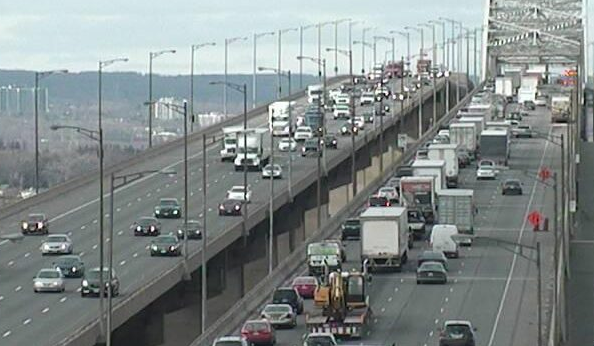
A weekend partial closure is required to complete bridge deck rehabilitation on the Niagara‑bound lanes of the Burlington Bay Skyway.
It is expected that there may be traffic delays during this closure.
- Advance signing and notification will be provided to motorists so they can plan an alternate route.
- Eastport drive will remain fully open to traffic as an alternate route, allowing motorists to rejoin the QEW Niagara-bound.
- All ramps at Northshore Blvd will remain open during these overnight full closures.
Travellers can visit 511on.ca, @511Ontario, or www.burlingtonskyway.ca for updates on work and traffic impacts.

By Gazette Staff
June 12th, 2026
BURLINGTON, ON
The Halton Regional Police Service (HRPS) has made an arrest in connection to the home invasions in Burlington and Oakville that took place on April 22, 2026 (see original release below).
 On June 9, 2026, a 14-year-old male of Scarborough was arrested by HRPS officers. He has been charged with the following: On June 9, 2026, a 14-year-old male of Scarborough was arrested by HRPS officers. He has been charged with the following:
· Robbery
· Disguise with Intent (2 counts)
· Possession of Property Obtained by Crime over $5000
· Fail to Comply with Release Order
· Break and Enter with Intent
In accordance with the Youth Criminal Justice Act, police cannot identify the accused.
The accused was held in custody pending a bail hearing in Milton.
Police are still investigating these home invasions and working to identify and arrest additional suspects.
Anyone with information regarding this investigation is asked to contact the 3 District Criminal Investigations Bureau at 905-825-4777 ext. 2316.
Tips can also be submitted anonymously to Crime Stoppers: “See something? Hear something? Know something? Contact Crime Stoppers” at 1-800-222-8477 (TIPS) or online at www.haltoncrimestoppers.ca.
 By Gazette Staff By Gazette Staff
June 12th, 2026
BURLINGTON, ON
With Toronto going bonkers over the first FIFA World Cup game taking place this afternoon Burlington will have to wait until July 9th for there to be any FIFA buzz in the city
The City announcement has Canada will Celebrate a first-of-its-kind program that will unite communities across the tournament co-host country and carry the energy, pride and passion that are synonymous with the world’s biggest sporting event.
 The program will bring FIFA World Cup energy to 39 stops across 35 communities. The program will bring FIFA World Cup energy to 39 stops across 35 communities.
While the Host Cities of Toronto and Vancouver will host matches and the FIFA Fan Festival™, Canada Celebrates offers communities countrywide the chance to share in the experience of the FIFA World Cup.
The countdown to Canada Celebrates is on! The free, family-friendly fan experience takes place on July 9 at 1 p.m.
Join us at Spencer Smith Park, Burlington, to watch a live FIFA World Cup 2026™ match, activities for youth and entire families including soccer skills challenges, selfie walls, music, cultural programming, guest appearances. The beer garden is open from noon to 9 p.m.
A live viewing party for the quarter-final match will begin at 4 p.m.
Visitors are encouraged to take public transit or active transportation to the event.
By Pepper Parr
June 12th, 2026
BURLINGTON, ON
It was a surprise to many when Councillor Lisa Kearns walked out of a Council meeting saying she could not do her job if the Chair would not hear a motion to defer an item to a meeting of Council on the 23rd.
Late Thursday afternoon Kearns issued the following statement.
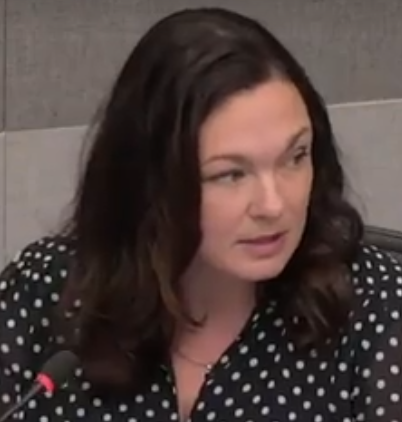 Lisa Kearns Ward 2 Councillor and candidate for the office of Mayor. “Today, I excused myself from the June Committee of the Whole meeting following two agenda items affecting Ward 2 Residents being Closed for Debate.
“I asserted that I could not dispose of my obligation to represent the community on items related to Cricket at Central Park and Options to Restrict Construction without the procedural opportunity to state my voting rationale and complete my questions. Since this pattern emerged, I silently exited the Council Chambers for the balance of Committee and will resume with my work on behalf of the constituents I serve at Council on June 23rd, 2026.
What was that all about?
It was really, really messy – the worst I have ever seen at a Council meeting.
Lisa Kearns had asked if an agenda item (cricket pitches) could be referred to council, when “I will have an explanation when that’s up on the board.”
Chair Stolte: Sorry, we have an amendment on the floor to refer the Downtown Parking Market Feasibility Analysis Report to the June 23, 2026 meeting of Council. Councillor Nison, would you like to speak to your amendment?
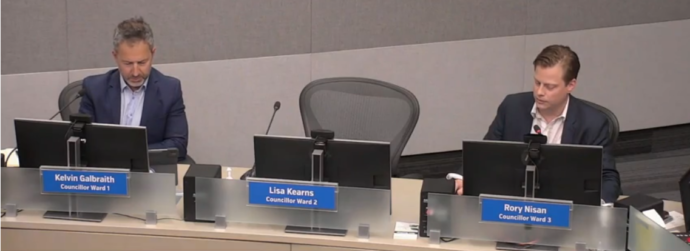 Councillor Nisan: I think Councilor Kearns is no longer here. Councillor Nisan: I think Councilor Kearns is no longer here, and I think she’s been the primary proponent of this issue. I would like to have a full debate with as many members present as possible. I believe she has been bullied out of this chamber, so I think that we should have a chance to cool off and actually be able to hear from her.
I am asking you to rule on my own point of privilege. The only person who would be seen as bullying Councillor Kearns out of the chamber would be the chair, and I think that the chair was given the option to address the point of privilege in an appropriate way.
Chair Stolte: I would request that you retract that statement, Councillor
Nisan: Thank you, Chair. I will certainly not retract that statement.
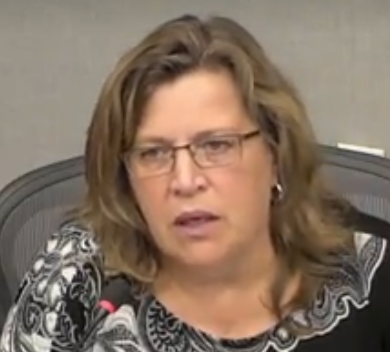 Chair of the Standing Committee Shawna Stolte. Chair Stolte: Okay. Well, I will certainly not support referring this to council myself, given the fact that Councilor Kearns certainly has the option to be here to discuss this matter if it’s important to her and her ward. If she’s chosen to leave, that’s her prerogative.
Nisan: Point of order. Could the clerk read out the rules around a point of privilege. There’s nothing specifically to the chair calling a point of privilege. If you could just confirm that a chair can raise a point of privilege and rule on it.
Clerk: Perhaps it’s a point of order where that’s the case, but there is nothing in the procedure by law that says that they can’t.
Chair Stolte: Okay. All right. Thank you. I believe that the chair is a member of committee, so I don’t see why the chair would be restricted from that. Moving forward. Any comments or questions to the amendment on the floor?
Mayor Mead Ward: Thank you. I also will not be supporting the referral, and certainly not for the alleged reasons that have been put on the floor. This, and I will say that I support the chair’s ruling. There is option within the procedure by law. If anyone wishes to challenge the chair, they can put a challenge on the floor, and the council can vote on it. That wasn’t done, and that hasn’t been done. We have an obligation as a council to conduct ourselves in a professional and businesslike manner, which means that we read the materials in advance, we ask as many questions of staff as we can, we respect each other enough that if we have those questions or proposed amendments, that we try to circulate those in advance.
 Marianne Meed Ward, a two term Mayor is seeking a third term. Two members of Council, Rory Nisan and Lisa Kearns are candidates for the office of Mayor. A number of the items, including those that caused the two votes to shut the debate down, were part of your package that was available over 10 days ago, and there has been no communication with any of the movers that I’m aware of to to deal with these matters and bring forward something in a professional and respectful way that respects the time of everyone we have staff around this this horseshoe that don’t need to be part of every single conversation that that some wish to have, we are wasting their time and grinding through the through the agenda in a way that I feel is disrespectful to all of us, and that is not a reflection of the kind of high quality stability that we want to have around these chambers, and what we’ve started to see is chaos unfolding. That is not the fault of the chair.
Nisan: It is.. it is. The comments are not related.
Chair Stolte: I believe they are. They go directly to why I won’t support the referral. Nobody has bullied anyone out of this chamber. If somebody wishes not to participate in discussion because it doesn’t go the way they wish it will, that is their choice. They are letting down their constituents and they’re letting down this council and have an obligation to be here. We didn’t get any regrets when we moved this item and the entire rest of the agenda to today’s proceedings, and we have been in council and committee meetings, committee meetings now for two and a half days, the longest ever that we’ve had, because we are grinding on these issues. We owe ourselves better respect and better professionalism? We owe our staff better professionalism. The referral actually was in response to a motion I brought, and I am quite comfortable that the voice of business has been heard. I have been speaking with the BIA; they’re very happy with this. They want us actually to get on with it. So that’s what we’re going to do today.
Chair Stolte: Any other questions or comments to the referral amendment that’s on the floor? I’m going to take a second to comment and just add to what the mayor has stated about the reason given for the request for the referral. Since Tuesday, I’ve had numerous staff and residents reach out to me to say that this point in time council is acting like a class of kindergartners, that is very embarrassing. So, to that end, I do believe we also should be conducting ourselves in a much more professional manner, and I will not be supporting any referral for this, and I will consider a second question or comment from Councilor Nissan.
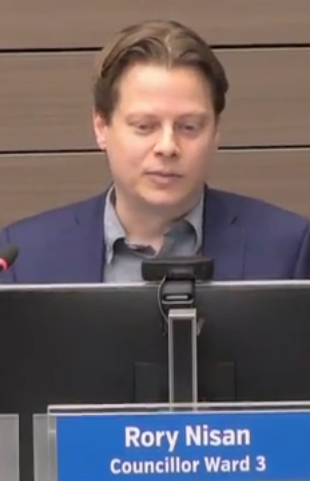 Rory Nisan: Ward 3 Councillor and candidate for the office of Mayor. Nisan: I would agree with those residents’ statements. It’s a little harder to ascribe who’s to blame for that. Getting back to the possible to the referral motion. I think council has always improved by having more voices at the table. I think that the debate today has devolved and is no longer serving our primary purpose here.
So I think it would be wise, and we would have a better, if we refer this to council or to a future committee meeting, and when it comes to the question of bringing motions ahead of time. That argument is terrifically weak and undemocratic.
Chair Stolte: Any more comments or questions on the floor to the referral motion on the screen in front of us? Seeing none, I’m going to call the vote. All those in favor of referring the downtown parking market feasibility analysis to the June 23 26 council meeting. All those in favor?
Any opposed? And that does not carry.
Council now moved on to another issue: Downtown parking and the need for additional space. This took place while the most informed member of Council on downtown parking matters was not in the room.
Councillor Nisan: My main question is, there’s a cost estimate here of 150 to $300,000 If I recall correctly. I would just like to ask if it’s a wide range, and maybe you could explain that range, and I’ll probably have follow-up questions.
Realize that Councillor Kearns is no longer in Council Chamber. The subject now is downtown parking. Ward 2 has the most serious parking problems; Kearns also sits on the parking committee.
They return on the 23rd – will they have learned to get out of the sandbox where children play and behave as responsible members of a Council that will face the voters in just over five months?
 By Mark Denver By Mark Denver
June 12th, 2026
BURLINGTON, ON
A reader writes and asks: “Is online poker actually growing, or does it just feel that way because I keep seeing ads for it everywhere?”
Fair question. And the answer is – yes, it’s genuinely growing. Not ad-budget illusion. Real numbers.
 People from anywhere in the world can get in on a poker game. Mobile poker app downloads jumped over 30% in 2023 alone. That’s not a blip. That’s a structural shift in how poker enthusiasts engage with the game.
Online poker isn’t a niche hobby anymore. It hasn’t been for a while. Millions of new poker players join platforms every year, and the data across multiple sites confirms it’s only accelerating.
Why Participation Exploded – And Why It Stayed High
The pandemic forced people online. We all know that story.
But what’s interesting is that poker enthusiasts who began playing online during lockdowns didn’t quit when restrictions lifted. They stayed. They brought friends. They got competitive.
Faster internet helped. Better mobile interfaces helped. Live dealer options helped. Each barrier that disappeared brought in another wave of casual players who previously couldn’t be bothered.
Free poker did a lot of the heavy lifting here, and that’s something the industry doesn’t talk about enough. Platforms that let beginners play poker with zero financial risk – through free poker modes – quietly built their future paying audiences. Once you’ve played a few hundred free poker games and you’re not embarrassing yourself anymore, the jump to real money feels a lot smaller.
That quote should be printed and framed in every poker product meeting. Free poker wasn’t charity. It was strategy.
A well-designed poker app also removed the last real excuse not to play. You don’t need a desktop setup. You don’t need a poker room nearby. You need a phone and fifteen minutes. That accessibility shows up directly in the participation numbers.
Who Is Actually Playing? The Demographics Are Surprising
The poker enthusiasts driving platform growth right now aren’t who you might envision if you closed your eyes and imagined “poker player.”
Three groups dominate the data:
- Ages 25-34: The largest single group – about 38% of active users on most major platforms
- Ages 35-50: The fastest-growing group, up 22% year-over-year since 2022
- Female players: Now about 28% of new registrations, up from 18% in 2019
 Major increase in the number of women playing poker: Are they winning? That last number deserves more attention than it gets. A ten-point jump in female registration over five years isn’t a rounding error. It’s a real demographic shift – and platforms that ignore it are leaving money on the table.
Geography matters too. Urban poker players still lead in volume, but suburban and rural participation is climbing as mobile access improves. States with regulated markets show longer average session times – which suggests that legal clarity genuinely makes poker players more comfortable.
BetMGM’s player data is a useful example here. Their poker tournaments serve both casual players and serious grinders within the same system. That dual appeal isn’t accidental – it’s built into how they structure promotions.
PokerStars remains one of the largest platforms in the world. Researchers cite its user base constantly when studying online gambling behavior – it’s the benchmark everything else gets measured against. For poker enthusiasts who want access to thousands of real opponents across many poker games, it’s still hard to beat.
Regulation Is Shaping Player Behavior More Than Anyone Expected
Six U.S. states have legalized and regulated online poker as of 2024: Delaware, Michigan, Nevada, New Jersey, Pennsylvania, and West Virginia.
Six. Out of fifty. So most American poker players are still operating in legal grey zones – and that matters.
Participants in regulated states behave differently. They deposit more often. They play longer sessions. They report higher satisfaction. The data points to one clear reason – legal clarity reduces anxiety around real money transactions and payouts. When you know you can actually get your money out, you play more freely.
- New Jersey leads in total player volume among regulated states
- Michigan hit its projected 3-year numbers in just 18 months after legalization
- Nevada has the highest average buy-in amounts – which reflects an experienced player base that’s been at this a long time
The platforms operating across multiple regulated states have a real advantage here. They can compare state-specific behavior and adjust poker tournament timing, game availability, and promotions accordingly.
Participants stuck in unregulated states often end up on platforms like Bovada – real money cash games and poker tournaments built around Texas Hold’em and Omaha. The demand is clearly there. The regulation just hasn’t caught up yet.
Which raises the obvious question – why are only six states regulated in 2024? What’s the holdup? That’s a conversation worth having with your state representatives, not just your poker group.
Which Poker Games Are People Actually Playing?
The traffic data here is pretty lopsided, honestly.
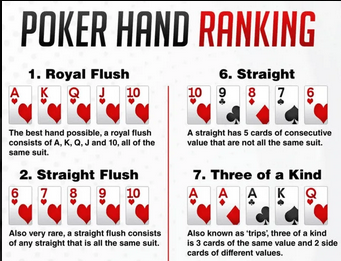 Texas Hold’em dominates. About 70% of all online poker traffic across major platforms. Its mix of skill, strategy, and luck creates something that’s easy to enter but deep enough to keep poker enthusiasts hooked far longer than simpler variants. Texas Hold’em dominates. About 70% of all online poker traffic across major platforms. Its mix of skill, strategy, and luck creates something that’s easy to enter but deep enough to keep poker enthusiasts hooked far longer than simpler variants.
For a full platform-by-platform breakdown of poker games and traffic data, casino jesus has useful comparisons that help you find where the real action is in specific variants.
Here’s how the major variants rank by traffic share:
- Texas Hold’em – ~70% of total traffic
- Omaha (PLO) – ~18% of total traffic
- Seven-Card Stud – ~5% of total traffic
- Mixed games and other variants – ~7% combined
Omaha is the clear runner-up among poker games. Four hole cards, bigger hands, more action – it appeals to experienced poker enthusiasts who want higher variance. Platforms that build up Omaha traffic tend to pull in higher-stakes regulars alongside their Hold’em crowd.
Using the Data to Actually Get Better
This section focuses on practical steps for improvement.
The poker enthusiasts improving fastest in 2024 aren’t always the most talented. They’re the most systematic. They treat session history as data, not just a record of wins and losses.
Platforms now offer hand history exports, positional win-rate breakdowns, and VPIP tracking – tools that used to require third-party software. If your platform offers these and you’re not using them, you’re leaving a real edge sitting idle.
 The social layer of a poker game isn’t just a nice feature – it drives measurable engagement that shows up in the numbers. Social features produce useful data too. Poker enthusiasts who play poker with friends in private club formats show higher session frequency and longer platform retention than solo players. That social layer isn’t just a nice feature – it drives measurable engagement that shows up in the numbers.
Serious poker enthusiasts often use a dedicated poker app to track table selection metrics. Average pot size, players-per-flop percentage, hands-per-hour – all of these signal table profitability before a single card is dealt. If your platform shows this data in the lobby, use it.
The ability to play poker online has also opened doors that used to belong exclusively to elite competitors. Events modeled on the World Series of Poker have expanded into the digital space – giving everyday poker enthusiasts access to tournaments they never could have reached before.
 By Gazette Staff By Gazette Staff
June 11th, 226
BURLINGTON, ON
It is now official: Shawna Stolte will not run for the ward seat she holds.
After chairing the worst Council meeting I have ever seen, it is perhaps wise to bow out now.
I wanted to take this opportunity to share with you, before I make it public, that after long and careful consideration I have made the decision that it is time for me to say goodbye.
These past 8 years have been some of the most challenging, rewarding, frustrating, gratifying, complicated, fulfilling, thought-provoking and stimulating years of my career and I will forever cherish the experience, memories and relationships that I had the good fortune to form over my time as your Ward 4 City and Regional Councillor.
 Shawna Stolte When I look back to 2018, when I was a fresh, new candidate I ran on a platform of empowering residents, promoting initiative such as the Private Tree Bylaw, flood mitigation strategies, attainable housing, fiscal accountability and improved public transit.
I had no idea how challenging it would be to achieve these goals…but I am so proud to be able to finish my time on Council knowing that I affected positive change on the mandate that I was elected to do.
Part of my decision-making process not to run for re-election was based on a need to feel confident that a quality candidate was stepping up to take over the reins in Ward 4.
To that end, I am so pleased to heartily endorse Chris Carter for Ward 4 City and Regional Councillor in Burlington.
 Chris Carter Chris has spent the last 25+ years building businesses and organizations here in Burlington, mentoring leaders and showing up whenever the community needed a hand. Chris has been deeply involved with R.O.C.K Reach Out Centre for Kids and Nelson Youth Centre serving as a volunteer, board member and Chairman. Chris is well known for having co-founded Burlington Dads, a registered not-for-profit of with over 7,000 members that has raised well over $1 million for local charities and families.
Chris Carter is an established leader in the community, a mentor, and an amazing advocate for Ward 4 and I will be very proud to pass the torch to him come the election in October.
Thank you again Ward 4 for granting me the honour of representing you over the past 8 years and stay well,
|
|